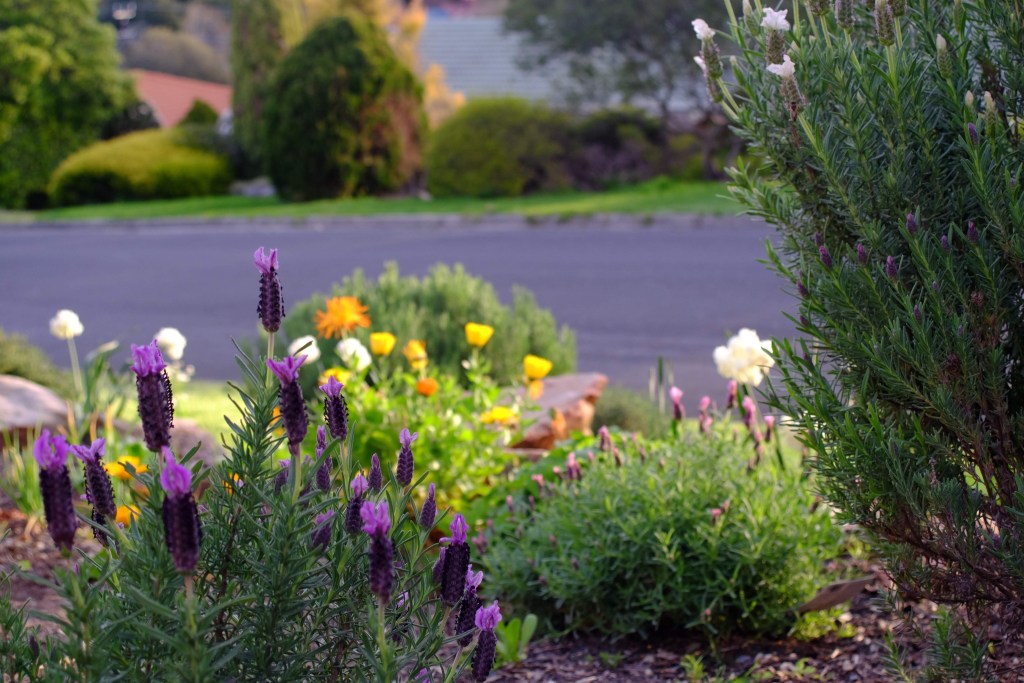
Spring has Sprung

Crimson-Flowered Broadbean

We are finally getting some sunny days – not many, but a few. It’s still chilly, but it is wonderful to see the sunshine!

Most of the fruit trees are covered in blossom, even the tiny little miniature peach tree I bought on a whim a few weeks ago. It’s called a Pixzee Mini Peach, and I could not resist its adorable tininess when I saw it at the Big Green Shed.

‘Pixzee’ Peach Tree

Bees are going absolutely crazy out there – they don’t know where to start, whether it’s the apricot tree, the plum trees, or the rather spectacular Crimson-Flowered Broadbeans. These heirlooms will produce regular looking broadies but look super cool in the veggie patch.

I’m also growing a big block of dwarf broadies, which also look lovely – but not as speccy.

In weather like this, I want desperately to be in the garden, yet it is still too cold to plant anything in the ground. So all I can do is get ready for warmer times.

Celeriac

I’m growing celeriac in one of the wicking beds – a bit of an experiment to see if root veggies will do well in the greenhouse. Of course, I should have tried something that a) grows faster and b) I have grown before. But I am always adventurous, and I had the seeds, so I gave them a crack. The thing with celeriac, is that it is glacially slow. It takes well over 100 days to reach maturity. I might not have the patience for that, tbh.

Celeriac is such an interesting plant, with its cool warty roots and lovely nutty taste. It’s also pretty expensive to buy – at my local greengrocer, which is not overly expensive, individual roots were selling last week for eight dollars each!

The plants have grown beautifully and look super healthy – but they are not yet swelling at the roots. To help boost them along, I thinned the plants out today, which I hate doing, but it really needed to be done to give them the space they needed to expand. Then I trimmed some of the extraneous side leaves so the plants would put more energy into root development. Lastly, I gave them a side dressing of granular fruit & vegetable fertiliser.

Seedlings

I’ve been growing eggplants, tomatoes, chillies, basil, and capsicum from seed in the greenhouse for the past month. With the warmer weather, they have started to take off!

One variety of tomato, Violet Jasper, was ready to be pricked out into larger pots today. This year, I’m experimenting with recycled yoghurt pots as the Stage 1 pot – they are a good size (not too big not too small), free (free-ish anyway, given we buy the yoghurt, but we do that anyway), and will reuse the pots several times before they go in the recycling bin. My husband drilled drainage holes in the pots for me, and I filled them with my proprietary blend of equal parts seed raising mix, perlite and coarse propagating sand.

As only the Violet Jasper were ready, I used the remaining pots to plant some zucchini Cocozelle, pumpkin Golden Nugget, and cucumber Poinsett. There are varying opinions about whether growing zucchini and other curcubits for planting out is a good idea – some say not, others yes. I’ve done both ways, and my opinion is that it doesn’t matter very much. I want to take advantage of the greenhouse to start my plants while it is still cool outside, so I’m doing it this way. It’s so much colder where I live than on the plains, so taking the risk of transplant shock is worth it to me.

I also planted out a feijoa (Pineapple Guava) tree in a pot. My husband is originally from New Zealand, where the feijoa is beloved. They don’t really appeal to me (I don’t enjoy the strong perfumey flavour), but he will love having them around and I’ll enjoy growing the tree. I do quite enjoy feijoa jam, so if the tree produces enough I may make that one day.

Feijoa

Building Jobs

As my husband had his drill out, I asked him to help me build a new climbing frame for climbing beans (similar to the one below).

Climbing Frame

He also fixed the passionfruit vine trellis, which was sagging due to the heavy weight of the passionfruit. Next week I will lean the axe against the passionfruit as a reminder that if it doesn’t produce any fruit this season, it will definitely get the chop.

I also built several trellises for my future pumpkins.

Picking

This time of the year is not as abundant in the garden as the Summer months, but we are still picking some veggies to supplement our diet. We are picking heaps of greens (lettuce, spinach, herbs), rhubarb, and cumquats.

Cos Lettuce

To fill in the hungry gap, I planted more lettuce seeds and spring onions today. About two weeks ago I also planted more bok choy and some rocket. Hopefully these will keep us going until the Summer plants take off!

I’m so excited for the next few months in the garden!

How about you – what are you doing to prepare for the warmer weather in your patch?
What I’m (Hoping) To Grow This Summer

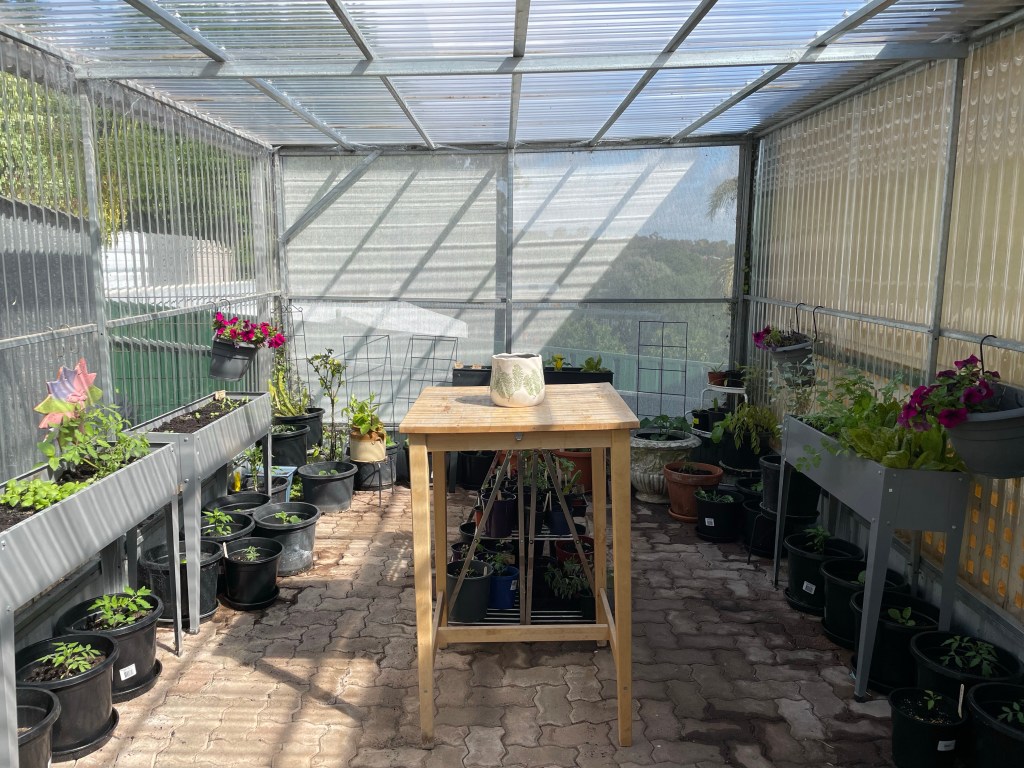
Greenhouse

As I have already mentioned, this Summer, pumpkins will feature heavily in my patch.

However, these will not be the only veggies I will be growing in my garden. I have tried not to go overboard buying seeds this Season (a bad habit of mine), and have also tried really hard to only buy seeds for plants I really want to eat. I have been given to garden experimentation in the past, but this season I really wanted to focus on giving up now my increasingly precious garden space to veggies that everyone in the family will really want to eat and that grows well in my microclimate. So I’m farewelling okra, even though we quite enjoy it, because it is just not productive enough in my garden to give it garden space. I’ll buy a bag of frozen okra if we want some.

Aside from the pumpkins (Anna Swartz, Queensland Blue, Butternut, Buttercup, Jack Be Little, and Galeux D’Eysines), I will grow climbing beans, a melon or two, cucumbers, zucchini/squash, tomatoes, eggplant, capsicum, basil, and chillies. The varieties are:

  • Eggplant: Rosa Bianca, Ping Tung Long, Listada de Gandia, Tsakoniki, Caspar;
  • Tomato: Violet Jasper, Rapunzel, Barry’s Crazy Cherry, Yellow Mortgage Lifter, Black Russian, Black Cherry, Jaune Flamme;
  • Bean: Australian Butter, Black Valentine, Snake Red Noodle, Edamame;
  • Melon: Sugar Baby, Delice De La Table, Crimson Sweet;
  • Cucumber: Richmond Green Apple, Marketmore, Heirloom Mix;
  • Zucchini/Squash: Golden Scallopini, Rondo De Nice;
  • Chilli: Heirloom Mix, Jalapeño;
  • Capsicum: Yolo Wonder.

These will be planted in the patch (pumpkins, zucchini, melons, beans), in containers (chillies, capsicum) and in the greenhouse (the rest). I have already planted the tomatoes and eggplant seeds in the greenhouse so they get an early start. As they grow into seedlings I will pot them on into larger pots so they develop stronger root systems before planting out in large wicking beds in the greenhouse. I find that even in the hottest of our Summer days, eggplants, cucumbers, and tomatoes do better in the greenhouse than in the patch – in fact, before we had the greenhouse I could never grow a single cucumber. My mother, who lives about half an hour away on the Adelaide Plains, is the queen of cucumber growing – I could not work out why I couldn’t grow cucumbers successfully.

Part of the issue is our elevation. We live on a hilltop at an elevation about 200m above sea level, compared to the Adelaide Plains (elevation about 50m above sea level). While our elevation does not compare to the hills and mountains we saw on a recent trip to New Zealand, it does make a difference. Family members living on the Plains report ripe fruit on tomato bushes and mulberry trees at least six weeks before our trees even show immature fruit. My cousin, who lives about an hour and a half north of us, is already picking asparagus, while mine is yet to poke its head up (my asparagus is also not planted in the best spot – I will need to move it in Autumn). My eldest daughter, who lives 15 minutes away downhill, has ripe fruit on her apricot tree several weeks before we do on ours. Our backyard microclimate is quite a lot cooler than her sunny backyard just 15 minutes away.

Understanding the impact of microclimates can make such a difference to growing success in your patch. I can’t grow pumpkins in the greenhouse (too humid, not enough space), but being fortunate enough to have a greenhouse means that I can grow other fruiting vines that need an extra boost of warmth.

What are you planning to grow in your veggie patch this Summer? Let me know in the comments!

Spring & Summer Garden Planning

The blog, like my garden, has mostly lain fallow for the past few months. I had a major project deadline to reach, which meant I worked 12 weeks worth of hours in 4 weeks. When I finished the project I decided to take a few days off, and predictably fell ill with the plague a nasty cold. All my gardening plans fell by the wayside while I languished in bed, cursing.

But resting makes time for planning. In between watching old episodes of Bones and reading delightfully silly Sookie Stackhouse novels, I also did some planning for my Spring and Summer veggie patch.

You might recall that I decided to grow green manures and legumes in my veggie patch over Autumn and Winter, letting my soil rest for the whole cool season. This was after my disastrous ‘no dig’ experiment, which left me with a rocky, dry, rootbound patch of sad looking soil.

Planning for Water

I am hoping that after this season of rest, my soil will be much happier and willing to take on some heavy producing plants. Think pumpkins, pumpkins, pumpkins. Last season was incredibly disappointing for pumpkins, which I mostly put down to the terrible weather. However, I do not believe that was the only reason. I think that the dodgy soil and my watering regimen was also a problem. I hope that this season’s soil repair efforts will make a big difference, but I have also decided that it is well past time to give up my old-school watering system (hose and sprinkler). This is just not serving me well anymore, partly because I am getting older, and partly because it takes way too much time (the part-time gardener’s most limited resource), and most of all because it just not efficient. This last year was the driest on record. My water bill for the Summer quarter was our highest on record. Something has to give.

From my sickbed I did some desktop research and contacted the highest rated and most consistently well-reviewed irrigation company near me, and asked them to quote. They contacted me five minutes later, and I organised for them to come out a few days later, when I was not so cooty-filled. They said they were not worried about my cooties and came out two days ago. While I sat in the weak sunshine feeling sorry for my snotty self, they measured and took photos, and then sent me an incredible quote (think about 25% of what I was expecting to pay) for an irrigation system for the entire veggie bed and all my backyard fruit trees. They are coming to install next week. If they do a good job, I will ask them to quote for the front yard fruit trees as well. If this system shaves down my Summer water bill and saves me time on watering, it will be money very well spent. If it improves my pumpkin growing experience, it will be worth its weight in…pumpkins. Which are quite heavy.

Last year was a singular disappointment in the pumpkin department. I refuse to live that disappointment again. That is the main reason for investing in the irrigation system. My brother had a spectacular melon patch last year, and he had installed a watering system. Pumpkins and watermelons are cousins, so I figured it was time to stop being a cheap stubborn old biddy and just do it already.

If you build it, they will come. Pumpkins, that is.

Planning for Spring

Spring is a great time to grow a quick cheeky crop of greens

The idea that we have four seasons that correspond to European seasons (but backwards) does not really fly in Australia. The Kaurna people, who are the traditional owners of the Adelaide Plains and the lands on which I live, describe four seasons, but start about a month later than we traditionally believe (i.e. Wirltuti or Spring, starts in October, not September, and Summer or Warltati starts in January, not December). That makes a lot of sense to me, when you consider that our September weather is still often so cold we have continue to run the heating at night. The soil is still often not warm enough to plant tomatoes outside until mid-October.

That means it is possible to plant a crop of cool season plants in Spring, if you plan well.

I don’t plant cool season veggies that take a long time to reach maturity in Spring (i.e. no cabbages or anything that has to form a head), but it is still worth planning to grow quick growing cool season veggies that will fill the so-called ‘hungry gap’ between the Spring and Summer harvest. This Spring I am planting:

  • SpinachHeirloom mix
  • Lettuce – Heirloom mix
  • Mizuna
  • Dill
  • Coriander
  • Bok choy – Baby Red
  • Park Choi – Do Cheong Chae
  • Pak Choi – Extra Dwarf
  • Chinese Broccoli – Kailaan
  • Rocket

I ordered a batch of el cheapo bargain seeds from one of my favourite suppliers, Happy Valley seeds, when they had a $1 a packet sale. Even if a few of these run to seed when the warmer weather hits, it doesn’t really matter much. At $1 a packet, if I can harvest a quick crop I will have done well.

I still have a healthy crop of spinach, bok choy, coriander and dill that I am harvesting now in the greenhouse, and a small crop of celeriac in a wicking bed that I am keeping my eye on. That may not reach maturity before the hot weather hits – it was always a risk to grow it in a wicking bed, but I am hoping it will start growing lovely warty roots soon.

Planning for Summer

Pumpkins, pumpkins, pumpkins

I have a clear plan for my Summer garden this year, and it involves pumpkins.

Pumpkins, you say?

Pumpkins, pumpkins, pumpkins.

Also, beans, eggplants, chillies, zucchini, cucumbers, and tomatoes.

But mostly, pumpkins.

To be honest, I love growing pumpkins much more than I love eating them. They are so beautiful, have so many varieties, and are just fun.

This year, in addition to the old faithfuls (Butternut, Buttercup, Queensland Blue), I am going to try:

All ordered online from the Diggers Club, the home of funky heirloom pumpkins.

On the bean trellis I am trying several kinds of climbing beans. I enjoy eating fresh green beans more than I enjoy eating pumpkins, to be honest, but for some reason, growing pumpkins is just so much more fun. So most available garden space will be handed over to the pumpkins. I may try a melon in with the pumpkins, despite my annual vow to never grow melons again.

Everything else (tomatoes, eggplants, etc) will go in the greenhouse. I ordered the eggplant, cucumber, and tomato seeds from Diggers Club and they arrived in less than a week, along with a native finger lime and lemongrass plant that I ordered on a whim, just coz.

On one sunny day when I felt slightly less like death warmed up, I staggered out to the greenhouse, masked up to avoid breathing in any dust and crud, and planted some eggplant and tomato seeds. Then I crawled back into bed.

Good job, soldier.

What I’m growing this Summer

I’ve been a bit late to planting this season, because I’ve been working non-stop, seven days a week. Unfortunately, just at the best possible time of year to be out in the garden, I am also usually the busiest, work-wise. My little office overlooks my front garden, and I have been watching the Spring garden bloom away while I have been working away. It’s kind of a bummer, to be honest. But not having any money is also kind of a bummer, so I have sucked it up and looked forward to the time it all settles down and I can get back out there.

That time is now, before the next major project starts (any day now). Carpe diem, my friends.

This weekend I spent the first full day in six weeks out in the garden. There was a *lot* to do out there, from digging up the used brassica plants, to a heckton of weeding, to feeding and mulching, to planting. Let’s just say at the end of the day I was in some state of pain. Seven days a week sitting at a desk is not good conditioning for a day spent digging and weeding.

It was lovely though, to be outside in the sunshine, not thinking about the election of schmonald schrump and focusing on what I can personally do to make my little patch of the world more beautiful and sustainable and healthy.

I tried to make some ruthless decisions about what to plant this year, based on experience about what has continually succeeded and failed in my garden over the past couple of years. I’m kicking out melons this year, and have carefully selected the type of eggplants, chillies, and capsicums. I tried to reduce the number of tomatoes but I have to admit I failed at that, big time. I’m trying to grow a lot more beans (both bush and climbing).

I am continuing the okra experiment, but it is not going well at all. After transplanting from the greenhouse, they are spindly and slow-growing. My husband thinks they will do better in the greenhouse as it is more humid, and he may be right, considering their natural habitat. I might plant some in the greenhouse and compare their growth to the open garden beds. I know that the cucumbers do not do well in my open garden beds, but in the greenhouse they do really well.

ladies fingers lot
Photo by Quang Nguyen Vinh on Pexels.com

The cucumbers are getting even more greenhouse space this season – we love them fresh and pickled, but it does depend on the pickle recipe. I did both sliced and spears last season, and the spears recipe was not very tasty (waste of delicious cucumbers!). We still have some and I will get through them, but it makes me a bit cranky when I make a pickle recipe that is not as delicious as it should be. There is no excuse for a bad pickle, when they could be so good.

Zucchini, squash, and pumpkins are also getting generous garden space. Last year’s pumpkins were a bit average. I love growing pumpkins, but I grew an heirloom variety that did not do well and wasted a whole season and a heck of a lot of garden space (Wrinkled Butternut – way less productive than the regular tried and true Butternut and much less tasty – my recommendation is not to bother). This year I am still experimenting with an heirloom (Musque de Provence) but also growing the tried and true Kent, which always kicks butt in my patch. From now on, I will combine an experimental pumpkin with a trusted variety so if the experiment does not work out I will still have the trusted pumpkin in pocket.

This year I am growing:

  • Beans: Kentucky Wonder Wax (Climbing), Cherokee Trail of Tears (Climbing), Goldrush (Bush). When I spotted Cherokee Trail of Tears I knew I had to grow it. This was apparently the bean that the Cherokee brought with them from their homelands and carried it with them all along the Trail of Tears – heirloom seeds tell a story of the people that have grown it, and this is a devastating story of horror but also resilience. To grow it and save the seeds is to honour their resilience and history;
  • Capsicum: Yolo Wonder, Sweet Chocolate;
  • Chilli: Anaheim, Jalapeno, Serrano;
  • Cucumber: Marketmore, Dragon’s Egg, Jefferson, and another one I can’t remember the name of! I grow Marketmore every year, it is a real trooper of a cuke, good disease resistance and is prolific;
  • Eggplant: Listada Di Gandia, Tsakoniki;
  • Okra: Clemson’s Spineless, Crimson;
  • Pumpkin/Squash: Kent, Musque de Provence; Oregon Winter Squash; Squash Sweet Dumpling.
  • Tomatoes/Tomatillo: Black Cherry, Black Russian, Jaune Flamme, Costoluto Fiorentino, Azoychka, Tomatillos;
  • Zucchini: Tromboncino, Ronde de Nice, Cocozelle.

This year’s planting decisions were made based on: what we like to eat and the cuisine we mainly cook (Indian, Italian, Mexican, all vegetarian), what grows well in my garden, what I have space to grow, watering requirements, and what I have the time to take care of.

How about you – what are you growing in your patch this Summer?

Weekend gardening jobs, 18th November 2023

Baby Quince

It was a stunning morning in the garden today – lovely and warm, sunny, and not too hot. I had exactly two hours to spend in the garden before a family event, so I spent time feeding the pots in the greenhouse with liquid fertiliser and planting out more of the seemingly endless capsicum seedlings I have grown from seed. I also sprinkled organic snail pellets around the patch. This is the first year I have ever had much of a problem with snails. Usually, a bit of snail damage does not bother me, but they have been really having a go on new seedlings. A new organic iron-based pellet has been released on the market. It’s not harmful to other critters, and breaks down to harmless iron in the soil.

I have also been diligent keeping up with the mulch in my front and back gardens. Organic mulch decomposes over time. I topped up the bare patches that have broken down since the start of Spring with chopped sugar cane mulch. Keeping up the mulch is critical at this time of year as the weather warms up and because it has been incredibly dry all Spring. According to the long range weather forecast broadcast on ABC radio last week, the dry weather will continue for the rest of Spring. This is not good news for we gardeners, especially those of us that do not have a rainwater tank. I have been watering my garden since September, as we have a lot of fruit trees that need regular water through blossoming and fruit set. Mulch is necessary to maintain all that good work and save water.

I threw a couple of handsful of fertiliser under each fruit tree – in the Summer growing season I try to do this each month.

Walking around the garden mulching, hand weeding, and feeding, I can keep an eye on changes in the garden.

This week I noticed baby quinces growing (above – so exciting), the Violet Queen beans have started to flower (so pretty), and I picked two Pepinos and four cucumbers already! Cukes are my garden white whale – I think I built the greenhouse just so I could successfully grow cucumbers.

Violet Queen bean flowers

I’m also happy to see that the squash and pumpkin plants I planted about six weeks ago (probably too early, tbh) have almost all survived the snail onslaught and are starting to put on some lovely new growth. I usually have good success with pumpkins and limited success with squash (the mysteries of life!) but I really hope this year that I do well with both – I love steamed summer squash with butter or olive oil and a little salt. I could eat just a big old plateful of them for dinner and be very happy! The squash plants look as good as I have ever managed, so fingers crossed!

Capsicums (Sweet Peppers)

Last year’s capsicums

This year I am growing a lot of capsicums (in the US, known as sweet peppers). I am mostly growing the long Italian-style capsicums, used primarily for frying and cooking, rather than the salad-style capsicums (although I am growing one sweet salad variety, Sweet Chocolate, which I like because it grows a lovely dark brown when ripe).

I personally find capsicum really easy to grow from seed, and more fun because you have access to more interesting varieties than the standard Californian Wonder you can buy from nurseries. However, I do have a greenhouse, so that does make it easier to grow them from seed.

If you do want to try it, use seed-raising mix in trays (I like the Yates seed-raising mix best – but it is pricey – and I also think the Seasol brand is good), and plant as many seeds as you think you will need, plus a few extra. Water well and keep damp until seedlings emerge. Keep the seedlings going with a weak liquid feed every week or so, and then when they are about half as tall as your iPhone, prick them out gently and replant them into pots to harden off. Keep them watered and fed weekly until you are ready to plant them out into the garden – or you can grown them in larger pots. They will be happy in pots throughout the growing season. Just make sure to grow them in a warm, sunny spot and keep them well fed.

For chillies – just do the same! I find chillies fruit earlier and more prolifically than capsicums though, so don’t be surprised if you find you have chillies well before your capsicums have even flowered – they are related, but chillies seem to have started their run before capsicums have tied their shoelaces.

What to do in the garden with the time you have this week

I am flat out this week! It’s deadline time for the next two weeks – so I will barely have any time in the garden – as with today, I will be carving out a set period to spend in the garden, and that will be that.

If you are like me, and time-strapped, here are some suggestions for what to do in the garden this week with limited time.

If you have an hour

Plant some seeds for Christmas giving, or pot up some seedlings ready for Christmas giving. It may almost be too late to plant seeds ready for Christmas, but you could have time, depending on what you are planting. I have had some plants growing from seed for quite a while with certain people in mind, ready for Christmas giving. I also have had some growing from cuttings. They are almost ready to pot on for giving in four weeks. I am keeping an eye out for a lovely pot to give the plant. Caveat: I love to receive plants, but I also understand that not everyone does! I have chosen these plants and the receiver carefully, based on what I know they will enjoy.

If you have 2-3 hours

Feed and water – but keep an eye on the weather. You should not liquid feed your plants if the temperature will exceed 25 degrees C, as it can burn your plants. Choose a cooler day, and a liquid fertiliser for your plant type (there are many different types on the market, including organic). It can take some time, which is why I do it on a weekend when I have a little more time to go back and forth with my two 9L watering cans. I find it is a great way to get up and personal with your plants.

If you have 4-5 hours

Then you are living the dream! If it was me, this week, I would be deadheading roses and other flowering bushes to keep the flowering flush going, hand-weeding, mulching, and choosing some showstopper pots and plants for a front door and patio Christmas display.

Unfortunately, I don’t have that time this week – but hoping to carve some out in a couple of weeks to do these jobs!

Have a great week!

Planning your vegetarian garden

I’m a vegetarian, and although my partner and young adult living at home are not technically, they are in actuality, because I do most of the cooking.

We are not vegans, because I have severe, life-threatening allergies that prevent me from being a healthy vegan. Our happy chickens produce eggs, and we eat dairy products. I don’t enforce my dietary choices on the rest of the family – they can eat what they like – but at home for the most part, we are a veggie family.

This means that how I garden has changed quite a lot. In the past, I was a bit more haphazard about what I planted. I often planted things for fun and interest rather than what we needed. Now I plant more intentionally, thinking about the plants that supplement a healthy veggie diet. We eat a lot of legume-based Indian curries, Mexican meals like burrito bowls, quesadillas, and fajitas, tofu stir fries, soups, and some veggie burgers and pasta. With these in mind, I have planned my Spring and Summer garden around the veggies that supplement these dishes.

variety of vegetables
Photo by Adonyi Gábor on Pexels.com

This Spring and Summer I am growing a lot of:

  • Chillies: a mix of very hot and milder chillies, for our curries, Mexican dishes, and stir fries, and for Indian and Mexican pickling. This year our choices include Devil’s Tongue, Jalapeño, Siam, Serrano, Guntur, Scorpion, Bird’s Eye, Habanero, Cayenne, Bhut Jolokia Chocolate. Er…we love chilli!
  • Capsicum: Sweet Chocolate, Italian Fryer, Quadrato D’Asti Gialo. These are sweet and frying peppers for salads, salsas, fajitas, and pasta dishes;
  • Eggplant: Japanese White, Thai Purple Ball, Slim Jim, and Turkish Red, for curries, fajitas, and pastas, as well as for our favourite Indian Brinjal pickle;
  • Basil: Lettuce Leaf, Cinnamon, and Sweet for pestos, pizza, and pasta dishes;
  • Squash and Zucchini: Tromboccino, Bennings Green Tint, and Lebanese, for pastas, curries, and stir fries;
  • Cucumbers: Gherkins, Mini Muncher, and Marketmore, for salads and pickling;
  • Tomatoes: Riesentraube, Green Zebra, and Mysterious, for salads, salsas, and sandwiches;
  • Tomatillos for salsas;
  • Spring onions: Candy Stick, for salads and stir fries;
  • Silverbeet: for stir fries and curries;
  • Herbs: Annual and perennial herbs for everything;
  • Melons: Mini Yellow Watermelon, and Rockmelon Petit Gris De Rennes;
  • Beans: Kentucky Wonder and Violet Queen, for stir fries and curries;
  • Pumpkins: Wrinkled Butternut, Buttercup, and Kent, for soups, curries, and pastas;
  • Lettuce: Cos and Freckled Cos, for salads.

90 per cent of these were raised from seed. All of these veggies, planted across our front and back yards and the greenhouse and balconies, when combined with dried and canned pulses, grains, dairy (cheese and milk), homemade yoghurt, and eggs from our chickens, give us a healthy veggie diet. We still supplement with some purchased produce like potatoes, onions, garlic when I run out of homegrown, ginger, and other veg I can’t grow. At the height of the season we can easily live out of the garden for at least 6 weeks, not including all the pickles we put up, which last for months.

I could choose not to do this, of course, but a) it’s fun, and b) I have the space. Also, have you seen the price of a capsicum lately? I generally believe that growing your own veggies is not cheaper than buying produce, but I have to say I might be willing to reconsider that theory soon.

We are fortunate to have a lot of space that we can dedicate to a garden and chickens. If I had less space, I would focus on growing chillies, capsicum, eggplant, lettuce, and herbs in pots.

Of course, you don’t have to be a vegetarian to have veggies that are your gardening must haves! What are your ‘go to’ Spring and Summer veggies?

Weekend garden jobs, October 14 2023

Fernery, Sydney Botanic Gardens

We spent a few days in Sydney last week, in perfect weather. Aside from the usual things (Opera House, Harbour Bridge, ferry rides), we visited the Botanic Gardens, which had a beautiful rainforest section and a fernery.

The fernery was stunning. We learned a lot about how ferns reproduce, and the variety of ferns in Australia. I recommend a visit if you ever visit Sydney.

We also took a ferry ride to the ritzy suburb of Rose Bay. The reason we went there, aside from the fun ferry ride, was that it has a beautiful, bay with crystal clear water, and art deco buildings in pristine condition. It has streets lined with enormous trees – really gorgeous and worth the trip.

Greenhouse Jobs

I spent several hours rearranging my greenhouse this morning. My husband suggested making better use of the space by shifting some shelving to the centre of the greenhouse. This was a really smart idea, and it also gave me the opportunity to clear out some cobwebs, creeping oxalis that had wormed its way in, and sweep out the greenhouse. Once I did that, I moved a heap of pots around, moved the shelving racks to the centre, and then had the fun of potting up a lot of seedlings that were ready to move from the seed troughs.

Rearranged Greenhouse

Mulching and weeding

Due to the combo of warm, sunny weather last week followed by cool rainy weather this week, the weeds have come out in full force. I have spent quite a lot of time trawling around the garden, bucket in hand, pulling out weeds. These were much worse in the front yard than the back, where I do admit to spending more of my time. Some kind of grass has found its way into the front garden, probably blown in, and I have finally given it my attention. Fortunately it was easy to yank up, but it really was all over the place.

Another job I have put off in the front yard was mulching (the back yard veggie patch has been properly mulched for several weeks now, in anticipation of the warmer weather). In the backyard I use a straw mulch (lucerne or sugar cane), but in the front yard I use a cottage mulch because it is more attractive. I finally started it today, and realised I really underestimated how much mulch I needed for this job!

Mulberry answers?

As I mulched and weeded, I listened to Roots and Shoots, an ABC gardening podcast from Western Australia. I also listen to the local Talkback Gardening podcast from here in South Australia, but when I have finished these, I turn to Sabrina in WA. Someone called in asking how often to water a mulberry tree during Spring. My mulberry tree is a current bane of my garden (you should see our back neighbour’s tree – covered in ripening mulberries! Our tree – tiny green fruits!). Sabrina said mulberry trees should be watered twice a week in Spring and three times a week in Summer. I water about half as often as she recommended – this could be the answer to my mulberry tree woes. I immediately put the hose on the mulberry tree.

Quinces and plums

It’s not all woe in my garden though! The plum trees we planted last year have tiny plums, the lime tree is covered in tiny limes once more, (after an absolute bumper crop last year), the apricot tree is loaded, and the quince tree we just planted six weeks ago is covered in blossom!

Smyrna Quince in bloom

Some people would recommend trimming blossom off a newly planted tree to let it put all its energy into growth. I just let the tree do its thing. That may not be the right approach, but it’s what I do.

The apple trees are also both covered in blossom, and we are hoping for a good crop this year.

On the other hand, I had to dig up the ring-barked passionfruit, leaving just one sad passionfruit left of the five I planted two years ago. I have two tiny Red Flamenco passionfruit growing from seed, still alive in the greenhouse. If these don’t make it, I might wave a white flag on passionfruit. It feels almost unAustralian, saying that.

What to do in the garden with the time you have this week

If, like me, you have minimal time, here’s some suggestions for what to do with it:

If you have an hour

Plant some zucchini and pumpkins. The soil has warmed up now (although it’s cold in our area today) – push some zucchini, pumpkin, or squash seeds direct where you want them to grow and wait. They will pop their heads up soon! I’m finding all the extra spots in the garden to poke a few pumpkin seeds, including the front yard.

If you have 2-3 hours

Keep mulching. I don’t know about you, but mulching takes me a long time (I’m not as young as I used to be, and my yards are big). I spent a couple hours on it a few weeks ago, and a couple hours today. I’m still not done. I hope to have finished all the mulching by the end of October, before the really hot weather hits.

If you have 4-5 hours

Start planning for Christmas. When I look at my garden now, I’m thinking about how it will look in eight weeks’ time. We often host, and I like the garden to look nice. Do I want plants to be in flower? It’s going to be a hot Summer, so everything will be a bit droopy unless I make sure to mulch and water well now and in the future. What about colour? If I want to have a display of flowers by Christmas I need to start planning for that now.

Weekend garden jobs 25 September 2023

Climbing Gold Bunny Rose

It’s been another month of working almost every weekend, which has meant very little time in the garden. That’s rough at this time of year, when every day seems to call out to me to spend time in the veggie patch.

This weekend, for my sanity and for the sake of my garden, I closed the computer and stepped out into the sunshine. It was lovely.

Also, very needed. The veggie patch was a bit of a mess, frankly. I had been quickly chopping off the broccoli heads when they were ready, and leaving the plants to produce side shoots, but they were also done. The garden was half full of spent broccoli plants and kale bolting to seed. The kale was a variety I bought in Tasmania at the start of the year, and it did not like our warmer Winter – the leaves were almost leathery, and we did not eat much of it. I’ll stick to the Mediterranean kales like Cavolo Nero next season.

After cleaning out the chicken coop, I pulled out all the spent plants and dug over the beds. Just that one task made the whole patch look so much better.

After digging over, I mulched with pea straw. I planted out the first eggplant of the season (Slim Jimheirloom), and some cool pumpkins called Wrinkled Butternut.

The Obelisk (not the Asterix)

On a whim last week I bought a finial, which I used to build an obelisk. A finial is a funky cast iron topper used to build a frame (the obelisk, kinda) for climbing plants – in this case, it will be climbing beans. My husband drilled it all together for me, and I installed it and expertly tied the twine 🙂

Behind it is another trellis. Beans will grow up that as well. This year I have planted Violet Queen, Kentucky Wonder, and Scarlet Runner. I have decided that this year I will pick many a bean.

The Greenhouse

I spent a few hours pricking out tomatoes and tomatillos from the seed troughs and into pots, to harden off ready for the garden. I haven’t grown tomatillos for well over a decade. My memory is they grow like the clappers, but hindsight can be 20/20. We will see how they grow in this veggie patch. Tomatillos, or husk tomatoes, make delicious salsa when roasted.

I also planted up yet more chillies. If all the chillies come off this year, we will be swimming in them. I already have 13 in pots in the greenhouse, and dozens coming on in the seed troughs. My plan this year is to make as much chilli pickle as I can, so there is method in my madness. Mwahahahahahaha.

What to do in the garden with the time you have this week

If, like me, you have minimal time, here’s some suggestions for what to do with it:

If you have an hour: feed your fruit trees!

They are awake now after their Winter dormancy, and like us when we wake up, they want food. Give all your fruit trees some specialist organic fruit tree fertiliser, and water in well.

If you have 2-3 hours: mulch!

This season is expected to be one of the hottest and driest Springs ever. The best thing you can do if you have some spare time in the garden is mulch the soil and retain the moisture of the Winter weather, before it heats up. I like sugar cane mulch, as it’s sustainable and breaks down slowly, but use any mulch you prefer. Just do it.

If you have 4-5 hours: feed everything, and start planting!

All plants need a feed at this time of year. I use organic liquid fertiliser, diluted well if the plants are seedlings, and stronger if the plants are established. Everything is hungry and wants a feed right now, so if you have time, wander around with your watering can and feed it all. Your plants will thank you. It takes time though! I’m always amazed at how long feeding all my plant babies can take.

I’m also trying to take advantage of the warm Spring weather to plant as much as I can right now. With the soil warming up and the longer sunny days, now is the time to plant fast-growing Spring crops, flowers, and start seeds for Summer. I have basil, cucumbers, tomatoes, beans, eggplant, capsicum, eggplant, chillies, tomatoes, watermelons, squash, and multiple types of pumpkin and zucchini in the greenhouse and the garden. As each plant is large enough to be potted on, new seeds take their place. And if you don’t have time, space, or interest to grow seeds, plant seedlings. Get the plants established before the really hot weather hits.

Planning for Spring + What to do in the garden with the time you have this week

I blinked and two thirds of 2023 whizzed by me. We are in the second week of August already and I honestly feel like 2023 just started.

I think that happens as you age, and are busy. Suddenly Spring is around the corner, and aside from ordering some seeds, I have done almost nothing to prepare for the Spring garden. So I spent this morning out in the garden, accompanied by some gorgeous helpers – my two daughters and my husband. It was so lovely to spend the morning outside as a family. My husband tackled the more physical jobs, as I am recovering from surgery, while the kids (adults, actually), helped with the more fun stuff – picking, planting, and watering.

Planting seeds

It’s late enough in the season to plant Spring and Summer seeds, if you have a warm spot to plant. Don’t plant into the garden yet – the soil is still too cold. But if you are lucky enough to have a greenhouse like I do, or a heat lamp, a heated seed mat (about $50 from Bunnos or the Diggers Club), or even a warm, sunny windowsill, you can start seeds now.

I used to use a heated seed mat, but now I raise seeds in the greenhouse. I have five raised troughs that I use to raise seedlings and to grow plants. Right now two are used to grow peas and lettuces, leaving three troughs free to raise seedlings.

Before I could plant new seeds, I had to move out the seedlings that were already growing: lettuces, tatsoi, kale, cornflowers, and spinach. I transferred some of these to little pots for my daughter to plant in her VegePod, and then the rest we planted out in the garden. These should grow quickly in the warmer days of late August/early September, and give us some fresh veggies during that ‘hungry gap’ before the Spring veggies are ready. While we were planting, we harvested a few veggies that were ready: peas, turnips, radishes, carrots, and some purple broccoli that was about to bolt (already!). My garden is at the stage where there is always something to pick, no matter the time of year.

My plan for the garden this year is to grow as many eggplant and chillies as I can, grow just a couple of my favourite tomatoes, a couple of good cucumbers, trial a different watermelon in the greenhouse, some beans, and lots of zucchini and pumpkins. I don’t have as much veggie growing space as I used to, as one side of the garden is now entirely devoted to seven fruit trees. I drop in some onions and other shallow rooted veggies in that space, but veggies do not feature heavily on that side of the garden. That means the veggie space has cut in half, and I have to rely more on pots and the greenhouse.

That is honestly fine, except I am expecting this Summer to be much hotter than last season. While I am looking forward to a hot Summer (I hate the cold!), I will also have to take care of plants in a poly hot house in very hot weather. The greenhouse has good ventilation, but I do expect that if it gets too hot in there, I will be moving plants out so they can survive.

With my Summer planting plan in mind, I had a couple of seeds I definitely wanted to plant today, then let my daughter choose the rest. We planted:

  • Passionfruit – Red Flamenco
  • Eggplant – Thai Purple Ball
  • Eggplant – White Egg (Japanese)
  • Eggplant – Red Ruffle
  • Chilli – Jalapeno
  • Chilli – Serrano
  • Chilli – Guntur
  • Tomatillo
  • Tomato – Green Zebra
  • Tomato – Mystery (that is, I saved the seed and forgot to label it!)

Looking forward to seeing these pop up over the next few weeks. Once they are large enough, I’ll pot them on, then plant the next round of seeds, which will include more eggplants, watermelons, cucumbers, and zucchini.

What to do in the garden this week

How much time do you have this week? If you are a part-time gardener like me, the answer may depend on your workload, caring responsibilities, and lifestyle. I love reading those lists that tell you what you need to do in the garden this week, but I note that most of them don’t take your time into account – so here’s a quick list to help you fit in some gardening tasks depending on how much time you really have (and if you don’t have any time – that’s OK. Your garden will survive!).

If you have…one hour

Give your houseplants some love.

In a tub of lukewarm (not hot) water, add a couple of drops of olive oil. Take some paper towel, scissors, and a jug of fresh water, and go around to all your houseplants. Using the paper towel, dipped in the water and olive oil and well squeezed out, wipe over the leaves of your plants to remove the dust that accumulates over time. You will be shocked at how much dust you can remove. The olive oil in the water helps to pull the dust off and gives the leaves a shine. A build up of dust on the leaves prevents the plants from photosynthesising properly, and slows their growth. Also, it just looks bad.

Using the scissors, trim off any dead or scrappy leaves, and as you move from plant to plant, use the jug of fresh water to give the plants a drink if they need it.

In about a month, it will be time to feed your houseplants – don’t worry about it now, as they will be dormant and not interested in taking up any food you give them. I use slow release prills or an organic fertiliser spray for houseplants, that is sprayed directly into the soil.

In early Spring I will also check out which plants need repotting. I can already tell from Saturday’s houseplant clean and watering, that my Fiddle Leaf Fig needs to be repotted. The soil is becoming hydrophobic and the plant is outgrowing the pot. But that job can wait until I have more time.

If you have…two or three hours

Start some seeds for your Spring garden.

Whether you are a flower gardener or a veggie gardener (or like me, a bit of both), you can easily plant up some seeds for your Spring garden in a couple of hours or less. Use recycled pots or seed trays, good quality seed-raising mix (I personally think the Yates speciality seed-raising mix is the best I have used, but Seasol is good as well), and labels (I use bamboo labels that are biodegradable – but you can make your own).

All your Summer veggie seeds can be started now – think tomatoes, eggplant, chillies, capsicum (peppers), etc. Spring flowers can also be started now. I recently planted cornflowers, but you can also start Cosmos, Scabiosa, Sunflowers, Forget-Me-Nots, and flowering herbs such as Calendula, Borage, or Nigella (also called Love-In-A-Mist).

Once planted, keep them damp (not wet), and keep your eyes open for them to pop their heads up.

If you have…four to five hours

Trim back woody herbs and weed, weed, weed!

This is the time of year that weeds go crazy. In our area, the weed that is everywhere is the dreaded sour sob (oxalis), but many grasses spread to unwanted areas as well. If you don’t keep on top of them, you can find weeds spread very quickly. While some gardeners are happy to use weedicides, I don‘t, which means many hours of hand-weeding.

Now is also the time of year to trim back woody herbs. As I have mentioned before, trimming back woody herbs and perennials is a time consuming task that I have been slowly doing over the past six weeks (I have a big yard). We are almost there, but I estimate another weekend of this task. I hate doing it, but I am always happy I did it in mid-Spring when all the woody herbs put on new growth and a gorgeous display of flowers.

A Virtual Tour of the Royal Tasmanian Botanical Gardens

Bumblebee on hydrangea

We have been fortunate to tale a trip around stunning Tasmania this past week, with the past few days based in Hobart. After a day spent at Salamanca Markets, and another at the Museum of Old and New Art, we walked to the Royal Tasmanian Botanical Gardens. Set on 14 hectares close to the centre of Hobart, the Gardens are one of the oldest botanical gardens in the Southern hemisphere (established in 1818). Our State was colonised in 1836, so the gardens are older than colonial settlement in our part of Australia. And it is obvious, just by the size of the trees. South Australia has some lovely trees, but they are teeny tiny compared to Tasmanian trees in the gardens, and even more so in the wild. I had heard the phrase ‘old growth forests,’ but I did not really understand the reality of it until coming to Tasmania. Trees here are giants. The RTBG has oak trees that could shelter the Merry Men. We have seen even larger trees since our visit to the botanical garden, but that was my first experience of really large trees.

Rose Arch – Pierre de Ronsard

My travelling companions took many photos (I’m not much of a photographer), which has allowed me to create this little virtual tour.

On arrival at the gardens, we were greeted at the gate by a friendly person who asked us our interests, handed us a map, and pointed us in the right direction. As our first goal was “COFFEE!”, she directed us to the cafe, and we stumbled forth. The cafe overlooks the water, so we sat for a while looking at the water and feeling very civilised before heading out on our garden walk.

Tasmanian Community Food Garden

Giant snowball pumpkin – you can’t tell from this photo, but it was about the size of a beach ball!

Once it was a working farm, then Pete Cundall established Pete’s Patch in this space, then it became the Tasmanian Community Food Garden, an organic community garden cared for by volunteers and community members. It produces four tonnes of fresh organic produce annually. On our visit, pumpkins, apples, tomatoes, pears, and herbs were growing in abundance.

I was happy to note that many of my own practices were also in evidence here. I did pick up some tips though: plant borage and calendula in among the pumpkins to encourage pollination. There were dozens of ripening pumpkins in the various pumpkin patches, so it clearly works.

Cinderella Pumpkins in the Community Food Garden

My husband took careful note of their technique for espaliering pears. We have multiple espaliered young fruit trees in our backyard but are always looking for more advice. The pear trees in this garden were beautiful, and covered with pears.

Much cooler is an apple tree arch. I wish I had space to recreate that in my garden.

Apple tree arch

I noted that the traditional ‘Summer’ crops that would be in full fruit in warmer States, such as chillies, zucchini, tomatoes, and eggplant, were not much in evidence here. There were a few healthy tomatoes and capsicum plants, but they already had brussels sprouts in the ground – we would not be planting these in SA for at least six weeks, and in my area probably not at all.

Japanese Garden

South Australia has a small but lovely Japanese Garden in the city. The RTBG Japanese Garden is about three times as large. It is beautiful, very tranquil, with many little hiding nooks for quiet contemplation. After a busy few days, I enjoyed finding a quiet spot to sit for 15 minutes.

Tasmanian Native Garden

Lemon Beautyheads

The Native Garden was quite large and clearly well-designed and considered. This was my favourite section of the RTBG, because it was so well-thought out, and I did not recognise many of the plants. Each plant was accompanied by a description of its traditional and medicinal uses.

Banksia

Conservatory

Exterior of the Conservatory

If you’re a reader of this blog, you’ll know I have a fascination with greenhouses. The RTBG has a gorgeous stone and glass conservatory, that houses a fountain and hothouse plants that would struggle to grow outside in Hobart’s cool temperate climate.

Fountain

The stone fountain was so relaxing it inspired me to consider adding a water feature to my garden. This is something I have avoided for many years, due to the maintenance. However, I think a solar powered water feature in the patio or greenhouse might be worth considering.

Interior of RTBG Conservatory

Of course, my greenhouse has been set aside for productive plants, while this Conservatory is decorative. I still found it inspirational. You can see a variegated ficus in the foreground of this photograph – beautiful! I’m going to search for one when I get home.

Heritage Cottage

The Heritage Cottage was the first building constructed in the gardens, and was originally a dwelling. Now it is a little museum showcasing some early botanical drawings and horticultural equipment, like an early terrarium design (see below).

Early Terrarium

My youngest and I both love botanical drawings and paintings, so we loved looking at the early colonial botanical drawings.

Statue outside Heritage Cottage

The Tasmanian Royal Botanical Gardens were my favourite place to visit in Hobart so far (we are going back to Hobart for a few more days). We spent most of the day there. If I lived in Tassie, I would visit regularly. If you are ever in Hobart, I recommend a trip – it is a beautiful, relaxing, and inspirational garden.